Why What You Wash Seamless Leggings With Matters More Than the Cycle Setting
Quick Answer: Pilling on seamless leggings is caused by abrasion, and the largest source of abrasion in a wash is the other garments in the drum. Cotton towels, denim, and anything with hardware are far rougher on knitted synthetic fabric than the machine’s agitation. Washing activewear separately, or in a mesh bag, prevents more damage than switching to a delicate cycle. Detergent choice matters too — fabric softener coats the fibers and accelerates the problem.
The cycle setting is the adjustment everyone makes and the least important one.
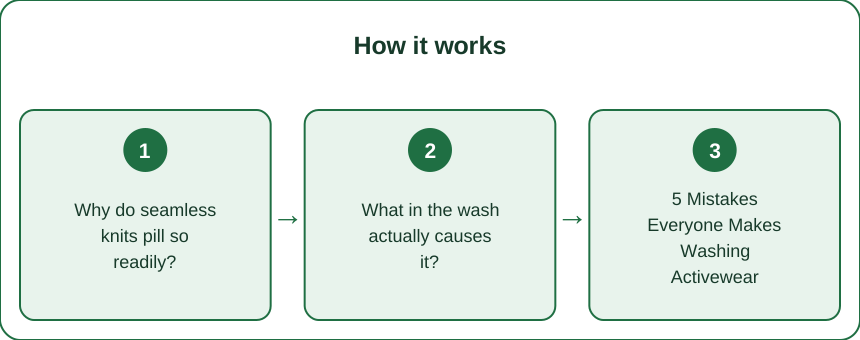
Why do seamless knits pill so readily?
Because of how they are constructed, not because of quality.
Seamless leggings are circular knitted rather than cut and sewn. That construction is what gives them their smooth, uninterrupted surface and their four-way stretch, and it means the fabric is a continuous interlocking loop structure rather than woven panels joined together.
Knitted structures have more surface fiber available to be disturbed than tightly woven ones. When abrasion lifts fiber ends out of the structure, they tangle with neighboring loose ends and roll into the small balls we call pills.
The fiber content compounds it. Nylon and polyester are strong fibers, which sounds like an advantage and is actually why pills persist. A weak natural fiber would break off and fall away; a strong synthetic fiber stays attached, so the pill stays on the garment.
So pilling requires two things: fiber ends lifted from the surface, and enough strength that they do not shed. Seamless activewear has both.
The controllable variable is the abrasion. You cannot change the knit structure or the fiber. You can change how much rubbing the fabric endures, and the wash is where most of it happens.
What in the wash actually causes it?
The other garments, by a wide margin.
A washing machine drum tumbles everything against everything else for the length of the cycle. What your leggings rub against for thirty to sixty minutes determines how much surface disruption they take.
The worst offenders, in order:
Cotton towels. Terry cloth is essentially a field of abrasive loops, and it also sheds enormous amounts of lint that embeds in synthetic knit surfaces. Washing activewear with towels is the single most damaging common laundry habit.
Denim. Heavy, stiff, and rough, with hardware. A pair of jeans in a load acts like a rock in a tumbler.
Anything with zips, hooks, or velcro. Direct mechanical snagging, which lifts fibers out of the structure immediately. A single unfastened bra hook can damage a garment in one wash.
Heavily soiled items. Grit is abrasive in its own right.
Against that, the difference between a normal cycle and a delicate cycle is modest. A delicate cycle with towels is worse for your leggings than a normal cycle with only other activewear.
The machine type matters somewhat too. Top loaders with a central agitator are harder on fabric than front loaders or impeller machines. That is worth knowing and is not something most people can change.
5 Mistakes Everyone Makes Washing Activewear
Using fabric softener. It works by depositing a coating on fibers. On synthetic performance fabric that coating fills the spaces the fabric needs for moisture wicking, reduces breathability, and traps odor-causing bacteria. It also makes fibers slicker, which does not prevent pilling. Never use it on activewear.
Washing with towels. Covered above, and worth repeating because it is so common. Towels and activewear should never share a load.
Using too much detergent. Excess detergent does not rinse out fully and builds up in the fabric, which stiffens it and holds odor. Activewear needs less detergent than a normal load, not more — half the usual amount is generally right.
Tumble drying. Heat is bad for elastane, which is what provides the stretch. Heat degrades it over time, which is why old leggings go baggy at the knees. The tumbling also adds a whole second round of abrasion. Air drying is the single best thing you can do for the lifespan of a legging.
Leaving them in a gym bag. Damp synthetic fabric in a closed bag grows bacteria quickly, and the odor that develops is genuinely difficult to remove once established. Hang them out until you can wash them, even if that means draping them over the bathroom door.
What is the actual routine?
Six steps, none of them time consuming.
Sort activewear into its own load, or use a mesh laundry bag if you cannot run a separate load. A mesh bag is a couple of dollars and does most of the work of a separate load.
Turn them inside out. The outside surface is what shows pilling, and turning them protects it. It also puts the sweat-facing side in direct contact with the water, which cleans better.
Fasten everything. Zips closed, bra hooks fastened, drawcords tied. Anything that can snag, secure it.
Use less detergent than you think, and skip the softener. A liquid detergent, roughly half the standard dose. A sports-specific detergent is a reasonable purchase for anyone with persistent odor issues and is not necessary for most people.
Cold water, and the cycle setting is your least important choice. Cold is better for elastane and for color. Delicate helps somewhat. Neither matters as much as the load contents.
Air dry, away from direct heat. Not on a radiator, not in direct sun for extended periods. A drying rack is ideal.
One seasonal note. As the weather cools and you start layering, activewear gets worn under other clothes and washed less frequently between wears — which is fine, and it also means the wash matters more when it happens. And air drying slows down noticeably in cool, humid autumn air, so allow more time or use a drying rack somewhere with airflow rather than draping things over furniture.
FAQ: Washing Seamless Leggings Questions, Answered
Can I remove pills once they have formed?
Yes, with a fabric shaver or a pumice-style sweater stone. Both work well. Do not use scissors or a razor, which risk cutting into the knit and creating a hole. Removing pills does thin the fabric slightly, so prevention beats treatment.
Does washing less often help?
Somewhat, in that fewer washes means less abrasion. Activewear worn for actual sweating does need washing after each use — bacteria and salt left in the fabric cause their own degradation and odor. Between-wear airing helps for light use.
Is hand washing worth it?
For a genuinely expensive item, yes. For everyday leggings, a mesh bag in a normal machine load of activewear gets you most of the benefit at a fraction of the effort.
Why did new leggings pill in three washes?
Most often, load contents — towels or denim in the same wash. Occasionally it is a fabric quality issue, and if you have washed them alone in a mesh bag and they still pill quickly, that is a reasonable basis for a complaint to the retailer.
TL;DR:
- Pilling is abrasion, and the biggest source of abrasion is the other garments in the drum — towels and denim above all.
- The knit structure and strong synthetic fibers mean pills form easily and do not shed once formed.
- Never use fabric softener; it coats the fibers, kills the wicking, and traps odor.
- Turn inside out, fasten everything, use half the detergent, wash cold with other activewear, and always air dry.
The cheapest fix is a mesh laundry bag. It does more for your leggings than any change to the cycle setting.
See It in Motion
Seen here: High Waist Yoga Leggings with Inner Pocket — shop it on bubblelime.com
Keep Reading
This article is for general informational and styling purposes only. Fit, sizing, and product availability may vary.