Why the Same Seamless Leggings Fit Differently in a Cold Room
Quick Answer: Seamless knit fabrics rely on elastane, and elastane’s stretch behaviour is temperature dependent. In cool conditions the fibre is stiffer, so the same leggings feel tighter, less forgiving, and slower to move with you; as they warm against your body they soften and stretch more readily. The fit you feel in the first five minutes of a cold room is not the fit you will have for the session - which is why judging seamless leggings on first impression in cool weather is misleading.
Here is what temperature actually does to the fabric, and what it means for buying and wearing them.
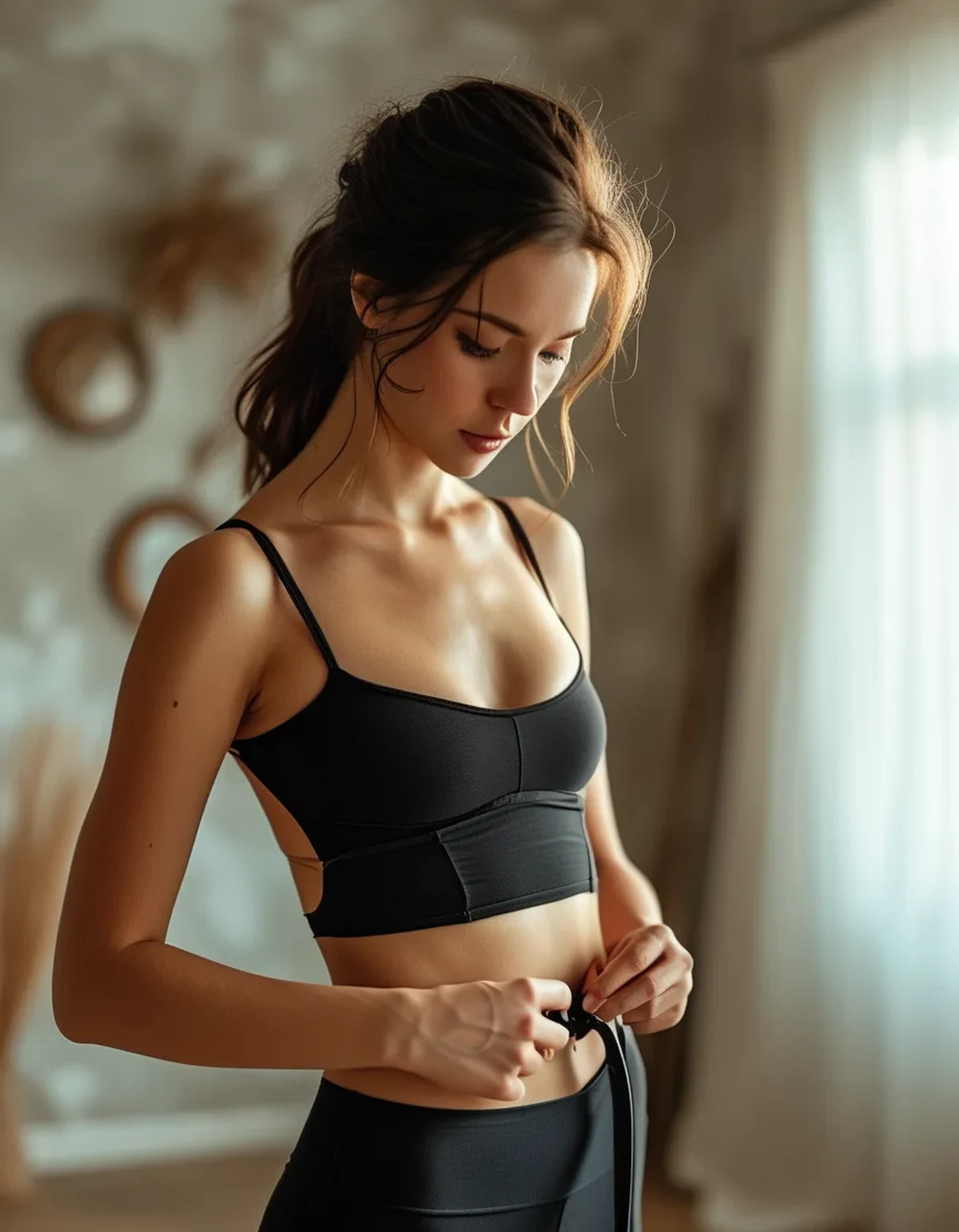
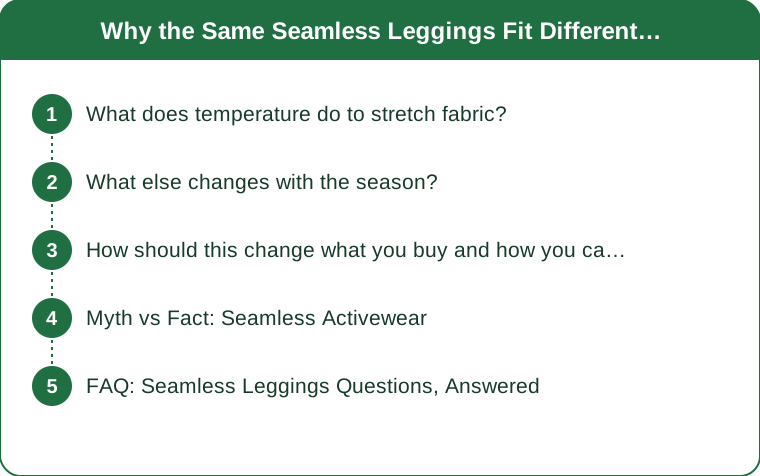
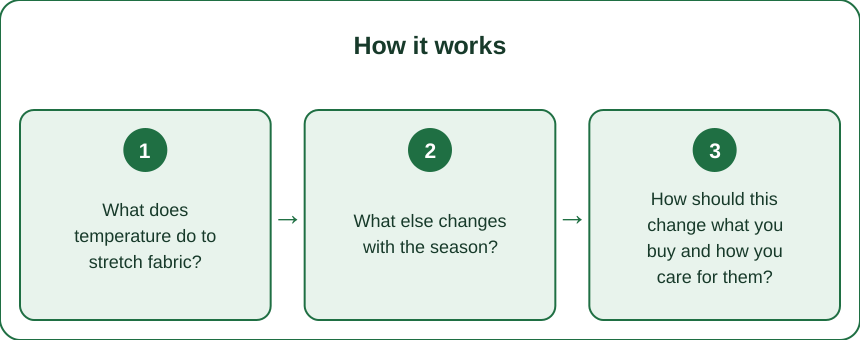
What does temperature do to stretch fabric?
It changes the mechanical properties of the elastic fibre directly.
Elastane is a polymer, and polymers stiffen as temperature drops. The fibre becomes less compliant, so the same amount of stretch requires more force - which you perceive as tighter, more restrictive leggings.
Warmed against your skin, the fibre softens. Body heat brings the fabric up over the first several minutes of wear, and the leggings become more compliant and more comfortable without anything else changing.
Seamless construction amplifies the effect. Seamless knits are engineered with varying stitch densities across the garment - tighter zones for support and looser zones for stretch. All of those zones change together with temperature, but the tight-knit support zones are where you notice it most.
Which produces the two experiences people describe. Cold-room leggings that feel restrictive at the waistband and behind the knee for the first five minutes, and warm-room leggings that feel looser than usual and less supportive.
And it means changing-room decisions are temperature-dependent. A shop that is cooler or warmer than where you will actually wear them gives you a fit impression that will not hold. This matters most in the transition seasons, when the shop, your home, and the studio can all be at genuinely different temperatures.
The practical version: give any pair five minutes of movement before judging them, especially in a cool room.
What else changes with the season?
Several things, and they all arrive at once in autumn.
Layering changes the waistband situation. Adding a longer top, a jacket, or a base layer adds bulk exactly where the waistband sits, which changes both the fit and the tendency to roll. A waistband that was flawless in summer can start rolling in October with the same leggings.
Static becomes an issue. Dry indoor air plus synthetic fabrics produces static cling that simply does not happen in humid summer air - and it makes leggings behave differently against other layers.
Washing and drying habits shift. Less line drying and more tumble drying in cooler months, and heat is what damages elastane most. A pair that survived summer untouched can lose recovery quickly over an autumn of tumble drying.
And you wear them for longer stretches. Summer wear is often studio-only; autumn wear tends to be all day, which means more hours under tension and more opportunity for bagging at the knees and seat.
Bagging is a recovery issue rather than a size issue. Elastane recovers from stretch over time, but it recovers more slowly when it has been held stretched for many hours - so all-day wear produces the knee bagging that studio-only wear does not.
One useful habit: rotate pairs and give them a day off. Elastic fibres recover with rest, and a pair worn every other day lasts noticeably longer than one worn daily.
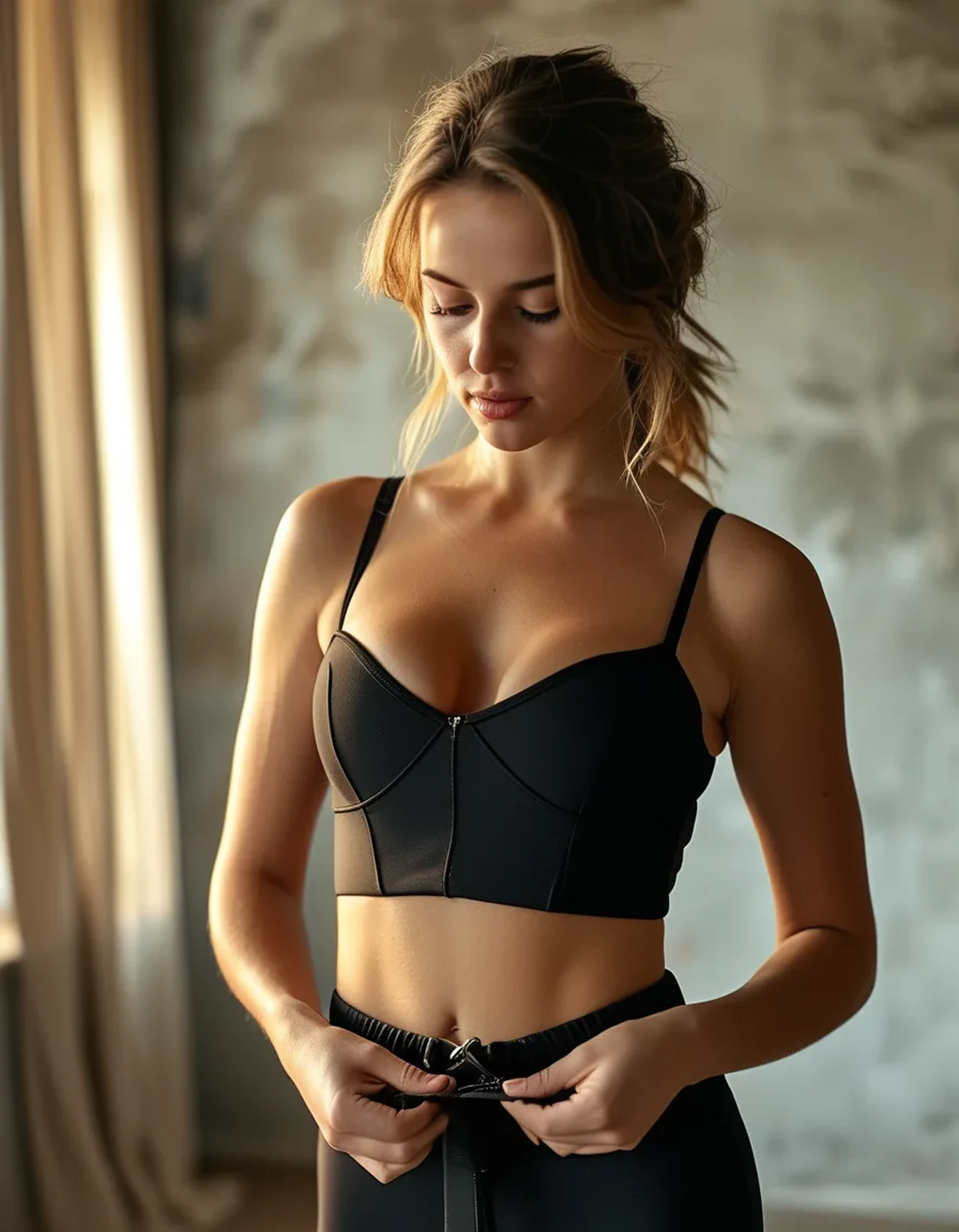
How should this change what you buy and how you care for them?
A few adjustments that meaningfully extend the life of seamless kit.
Try them on and move. Squat, lunge, and walk in the changing room - and account for whether the shop is warmer or cooler than where you will wear them. Standing still in front of a mirror tells you very little about seamless fit.
Do not size up because they feel tight in a cold shop. They will soften with body heat, and seamless construction relies on a degree of compression to sit correctly. A size up that felt right cold will sag once warm.
Wash cold and air dry, always. Heat is the primary enemy of elastane. Tumble drying is what destroys seamless leggings fastest, and it is the single most valuable habit to change.
Skip fabric softener entirely. It coats fibres, reduces wicking, and can degrade elastic recovery - the opposite of what you want in technical fabric.
Wash inside out, ideally in a mesh bag. This reduces abrasion and pilling, which is the other main way seamless leggings fail - and pilling on seamless knits is essentially irreversible.
And expect a finite life. Elastane degrades with wear, heat, sweat, and time regardless of care. A well-cared-for pair worn regularly lasts a season or two, and treating that as failure rather than as normal is how people end up disappointed in every brand they try.
A note on opacity, since it comes up in cold rooms: stretched fabric is thinner fabric, so the squat test in the temperature you will actually wear them is the honest test. A pair that passes in a warm shop can behave differently in a cold studio where the fabric is under more tension for the same movement.
Myth vs Fact: Seamless Activewear
Myth: Seamless means no seams at all. Fact: Seamless refers to a knitting method that minimises stitched seams by knitting the garment largely as a tube with varied stitch density. There are usually still some joins.
Myth: Tighter means more supportive. Fact: Support comes from knit structure and panel placement, not from overall tightness. A too-small pair compresses uniformly, which is less supportive than a correctly-sized pair with engineered zones.
Myth: If they feel tight in the shop, size up. Fact: Not in a cool shop. The fabric softens considerably with body heat, and sizing up frequently produces sagging and waistband roll once warm.
Myth: Pilling means poor quality. Fact: Pilling is largely a function of abrasion, wash method, and what they were washed with. Washing inside out in a mesh bag prevents far more pilling than paying more does.
Myth: Leggings that bag at the knees are worn out. Fact: Often they just need rest and a wash. Elastane recovers over time, and bagging from all-day wear frequently resolves - though repeated all-day wear does shorten the garment’s life.
The one that surprises people: the tumble dryer does more damage in one cycle than a month of wearing them. Heat is what breaks down elastane, and air drying is the single highest-value care habit there is.
FAQ: Seamless Leggings Questions, Answered
Why do my leggings feel tighter in a cold room?
Elastane stiffens at lower temperatures, so the same stretch takes more force. They soften within a few minutes as your body heat warms the fabric.
Should I judge the fit in the changing room?
Only with movement, and with the shop’s temperature in mind. A cool shop makes leggings feel tighter than they will be in use, which leads people to size up unnecessarily.
Why has my waistband started rolling in autumn?
Usually added layers. A longer top or a jacket adds bulk exactly where the waistband sits, changing both the fit and the tendency to roll.
What ruins seamless leggings fastest?
Heat - the tumble dryer above all. One cycle does more damage to elastane than a month of wearing them. Wash cold, air dry, and skip fabric softener.
Why do they bag at the knees?
Elastane recovers slowly when held stretched for long periods, so all-day wear produces bagging that studio-only wear does not. Resting a pair between wears helps considerably.
How long should a pair last?
Elastane degrades with wear, heat, sweat, and time regardless of care. A well-cared-for pair worn regularly typically gives a season or two, which is normal rather than a defect.
TL;DR:
- Elastane stiffens when cold, so the same leggings feel tighter and less forgiving in a cool room - and soften within minutes of body heat.
- Give any pair five minutes of movement before judging them, and account for whether the shop is warmer or cooler than where you will wear them.
- Do not size up because they feel tight cold - a size up sags once warm, and seamless construction needs some compression to sit right.
- Autumn brings added layers at the waistband, static from dry air, and more tumble drying - all three change how the same pair behaves.
- Heat destroys elastane. Wash cold, air dry, no fabric softener, inside out in a mesh bag.
- Bagging is a recovery issue, not necessarily wear-out - rotate pairs and give them a day off.
- Do the squat test at the temperature you will actually wear them - stretched fabric is thinner fabric.
One tumble dry cycle costs more than a month of wearing them.
See It in Motion
Seen here: Super High Waist Embossed Yoga Leggings with Inner Pocket — shop it on bubblelime.com
Keep Reading
This article is for general informational and styling purposes only. Fit, sizing, and product availability may vary.