Why Seamless Leggings Dig In More Mid-Squat Than They Do Standing Still
Quick Answer: Seamless knit fabric compresses evenly when you’re still but can bunch and dig at specific pressure points once your body folds at the hip crease during a squat — the waistband edge that felt smooth standing has nowhere to go once that crease forms. Check squat comfort specifically before buying, not just standing fit.
Standing in the fitting room mirror, the seamless leggings look flawless — no lines, no bunching, totally smooth. The second you squat down to test them properly, the waistband folds and digs right at the crease of your hip. That’s not a sizing mistake. It’s a specific mechanical interaction most fitting-room tests never check for.
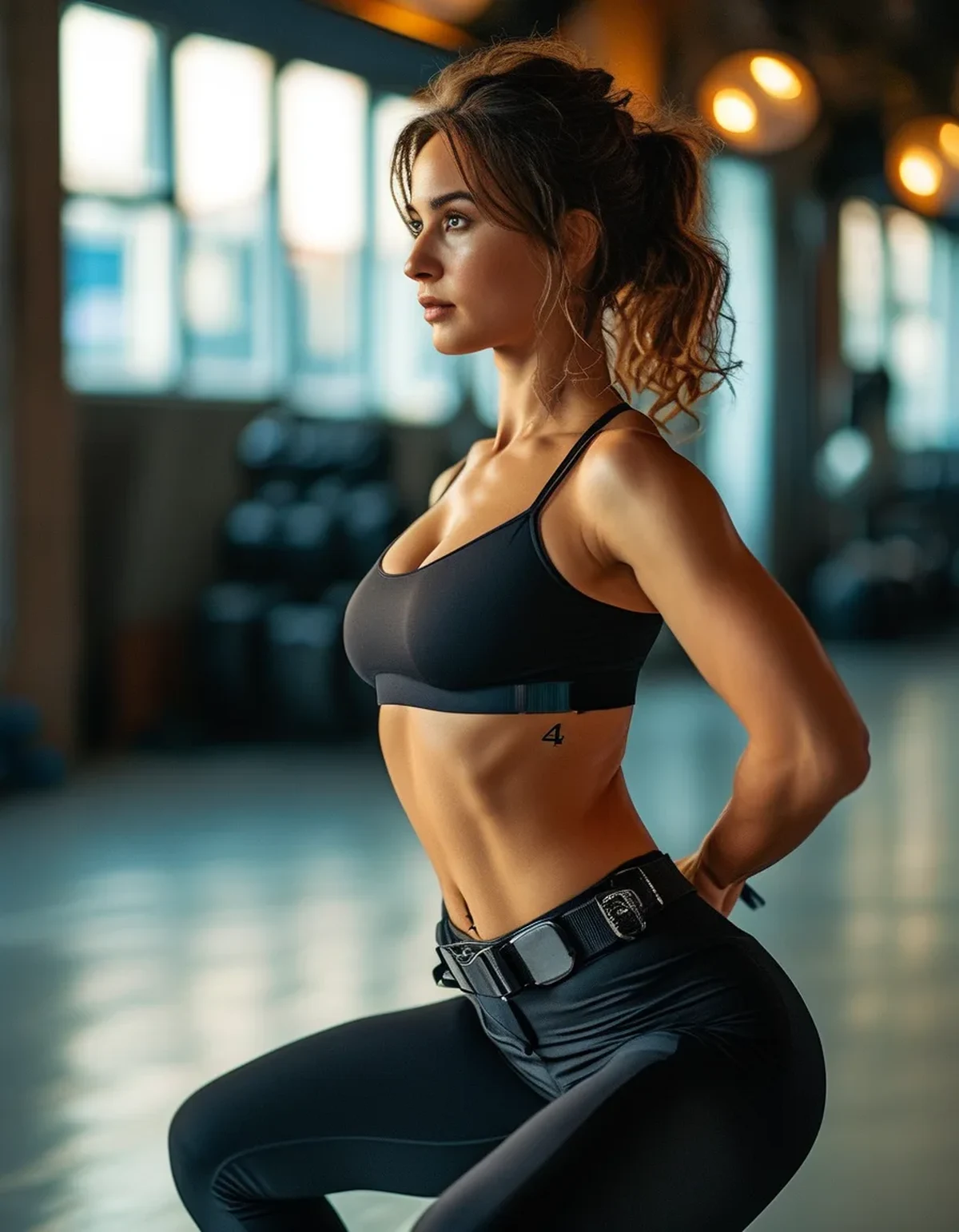
Why does standing comfort not predict squatting comfort?
Standing, your torso and hips form roughly one continuous line, and seamless knit fabric — which relies on even circular tension rather than a cut-and-sewn seam — distributes pressure smoothly across that continuous surface. The moment you squat, your body folds sharply at the hip crease, creating a compression point the fabric wasn’t distributing tension around before.
At that fold, the same fabric that was evenly tensioned now has to bunch to accommodate the new angle, and seamless fabric, without a seam to guide where that bunching happens, often folds unpredictably right at the waistband edge — which reads as ‘digging in’ exactly where it felt smoothest before.
Is this specific to seamless, or does it happen with seamed leggings too?
It’s more pronounced in seamless because seamed leggings have engineered panels and stitched seams that are specifically shaped to accommodate the hip crease fold — the seam placement itself acts as a built-in fold line. Seamless fabric, prized for its lack of visible lines, sometimes trades away that engineered fold accommodation for the smooth, uninterrupted look.
This is a real tradeoff, not a manufacturing flaw — smoother when still, less predictable when deeply folded.
What should you actually test before buying seamless leggings?
Squat in the fitting room, not just stand. Do a full, deep squat and hold it for 10 seconds, checking specifically at the waistband and the front hip crease for digging or rolling. Most people only check standing fit and a quick knee bend, which misses exactly the movement that causes the problem.
Also check a seated position (car seat, chair) since that creates a similar but slightly different fold pattern at the waistband that’s worth confirming separately.
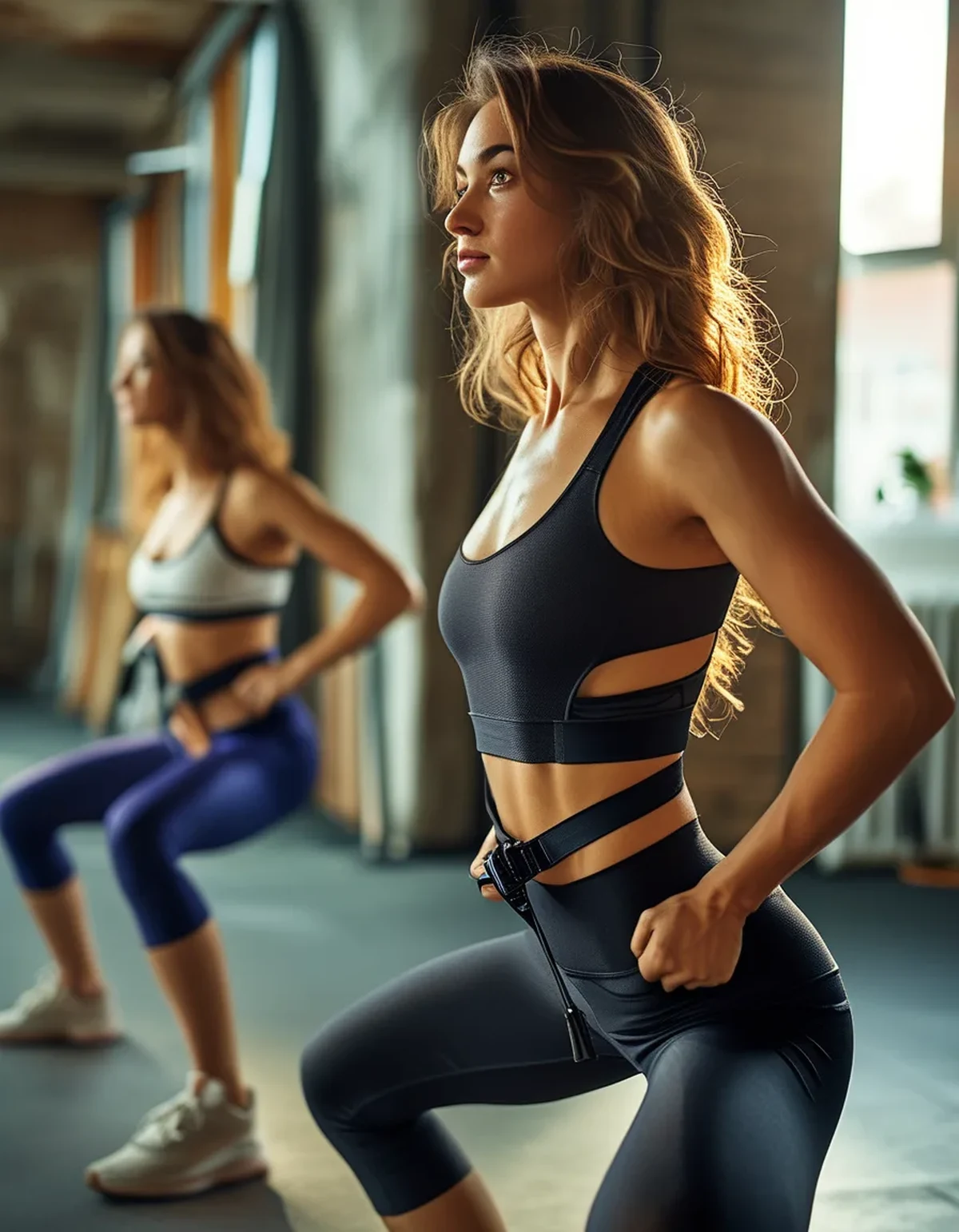
Does fabric weight or blend affect this?
Yes — heavier, higher-compression seamless fabric blends tend to handle the hip-crease fold better than very light, thin seamless fabric, because there’s more material integrity to distribute the bunching over a wider zone rather than concentrating it at one sharp edge. If deep squats are a regular part of your workout, a heavier seamless weight is usually the safer choice over an ultra-light one.
Myth vs Fact: Seamless Fit Edition
Myth: If it feels perfect standing, it’ll feel perfect moving. Fact: Standing fit and deep-flexion fit (squats, sitting) are genuinely different tests — always check both before buying, especially for seamless styles.
Myth: A higher rise always prevents waistband digging. Fact: A higher rise moves the digging point higher on your torso but doesn’t eliminate it if the fabric still has to fold sharply somewhere near the crease — rise height helps but isn’t the whole fix.
Myth: Sizing up always fixes seamless digging. Fact: Sizing up can sometimes make it worse by adding excess fabric that has even less predictable folding behavior at the crease — the fix is fabric weight and design, not just size.
Are certain seamless designs better engineered for this than others?
Yes — some seamless leggings use variable-density knitting, where the fabric is engineered to be looser in specific zones (like the hip crease) and tighter elsewhere, even without visible seams. This is a genuine technical solution to the problem, and it’s worth checking a brand’s product description for terms like ‘zoned compression’ or ‘engineered knit’ if squat comfort is a priority.
FAQ: Seamless Legging Fit Questions, Answered
Should I always squat-test leggings before buying?
For seamless styles specifically, yes — it takes 10 extra seconds and catches a problem standing fit alone won’t reveal.
Does this problem get worse over time with wear?
Somewhat — as seamless fabric loses some elasticity with washing, the fold-point digging can become more noticeable, since there’s less give to smooth over the crease.
Is there a workaround if I already own leggings that dig in when squatting?
A slightly lower-rise pair for squat-heavy days, or leggings labeled specifically for the fold-accommodating engineered knit design, tend to solve it better than trying to size up or down.
TL;DR:
- Standing fit doesn’t predict squat fit — the hip crease fold is a different mechanical test
- Seamless fabric can bunch unpredictably at that fold without a seam to guide it
- Squat-test in the fitting room, don’t rely on standing comfort alone
- Heavier fabric weight and ‘zoned compression’ designs handle this better than thin seamless
Next time you try on seamless leggings, do one full deep squat before deciding — it tells you more than the mirror ever will.
See It in Motion
Seen here: Super High Waist Embossed Yoga Leggings with Inner Pocket — shop it on bubblelime.com
Keep Reading
This article is for general informational and styling purposes only. Fit, sizing, and product availability may vary.