Seamless Isn't Shapewear: the Sizing Confusion That Ruins the Buttery Feel
Quick Answer: Seamless activewear’s whole value is second-skin comfort — knitted-in-the-round fabric with gentle, even stretch — and sizing down for extra ‘support’ converts exactly that into dig-in waistbands, rolled hems, and translucent squat-fails. Seamless is not shapewear: buy your true size (or up if between), let compression garments do the compression job, and judge seamless by the disappear-on-the-body test — if you can feel where it ends, the size or the cut is wrong.
The seamless section inherits shoppers trained by two neighboring categories — shapewear (‘size down, it should work to get on’) and compression tights (‘firm is functional’) — and both instincts sabotage the one thing seamless was engineered to deliver: the feeling of wearing almost nothing.

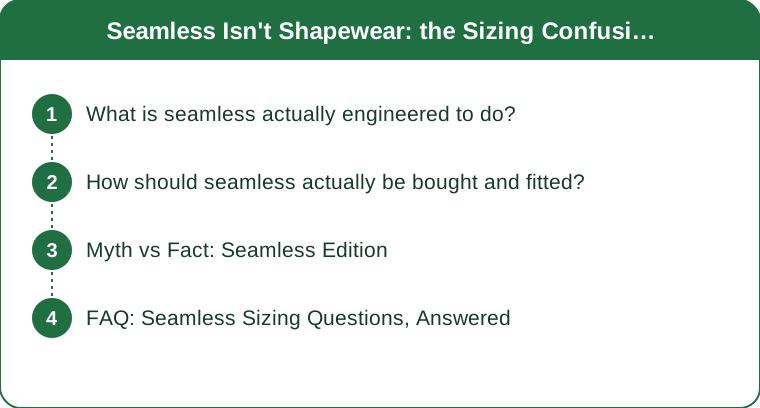
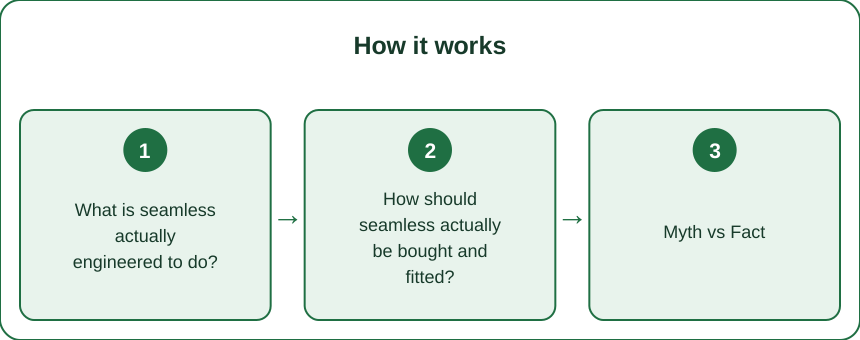
What is seamless actually engineered to do?
The construction story: seamless garments are knitted as continuous tubes (circular knitting), eliminating the side seams and panel joins of cut-and-sew activewear. What that buys:
- No seam friction points — the original selling proposition for chafe-prone activities and sensitive skin.
- Zoned knit texture — ribbing and density changes knitted directly into the fabric where stretch or breathability is wanted, instead of sewn-on panels.
- Even, gentle stretch in every direction — the ‘buttery second skin’ quality that made the category explode.
What it is not engineered for: high compression and structural hold. The same knit that stretches evenly everywhere cannot simultaneously clamp firmly anywhere — seamless construction and serious compression are, at the fabric level, competing goals. (This is also the honest answer to the classic ‘seamless digs in during squats’ complaint: an under-sized seamless waistband is a soft knit being asked to do a power-mesh job — it folds and digs precisely because it was never built to hold that line.)
How should seamless actually be bought and fitted?
The sizing rules:
- True size, always — up if between. The size-down-for-support instinct imports shapewear logic into a category where it produces only dig, roll, and sheerness. Seamless at correct size still feels snug (the knit recovers against the body); it just stops fighting you.
- The disappear test in the fitting room: correctly sized seamless should be hard to feel — no waistband awareness after 30 seconds, no edge lines mapping themselves on your skin. The moment you can trace where the garment ends by feel, size or cut is wrong.
- The squat-and-stretch audit (the category’s known weak spot): deep squat in bright light with a hand-mirror or phone check — seamless knits go translucent under overstretch more readily than woven-panel leggings, and the fail is invisible standing up. A size up solves most seamless sheerness; a different rise solves most rolling.
- Judge the knit weight for the job: feather-light seamless is loungewear-and-yoga territory; the denser knits handle training. The category spans both and the tags rarely say — hold it to light: more light through = lighter duty.
And the drawer logic that ends the confusion: seamless for comfort-first days (yoga, lounge, low-sweat training, sensitive-skin days), compression garments for support-first days (high-impact, heavy lifting, long runs) — two tools, two jobs, zero overlap required. The person disappointed by seamless ‘support’ and the person who finds compression ‘so uncomfortable’ are usually both holding the wrong tool for that day.
Myth vs Fact: Seamless Edition
Myth: Tighter seamless = more support = better workout. Fact: Under-sized seamless delivers pressure lines, not support — the knit folds at the waistband and digs at edges rather than distributing hold the way engineered compression panels do. If genuine support is the goal, the answer is a compression garment, not a smaller seamless.
Myth: Seamless means invisible under clothes. Fact: Seam-free ≠ line-free — seamless garments still have edges (waistband, leg openings), and under-sized ones create more visible lines (the dig ridge) than correctly sized cut-and-sew. For under-clothes invisibility, the specs that matter are edge construction (raw-cut/bonded edges) and correct size — seamless helps, sizing decides.
Myth: All seamless is squat-proof because there are no seams to gap. Fact: Opposite risk profile — no seams to gap, but knit overstretch goes sheer, and darker colors only partially hide it. The squat test is more mandatory in this category, not less. (The category’s honest résumé: unbeatable comfort and chafe-elimination; sheerness and serious compression are its known limits.)
The purchase reframe: seamless competes on how little you notice it — every buying instinct imported from categories that compete on how much you feel them (shapewear’s grip, compression’s hug) points the wrong direction here.
FAQ: Seamless Sizing Questions, Answered
My seamless leggings roll down at the waist — size, rise, or quality?
Order of suspects: size (too small = fold-and-roll is the classic sign — go up), then rise (mid-rises roll on bodies where high-rises anchor — the same waist-anatomy logic as all leggings), then knit quality (the cheapest seamless skimps waistband density). One size up fixes the majority.
Why does my seamless set feel amazing at yoga but unsupportive running?
Because that’s the design brief — gentle even stretch is yoga’s dream and running’s shrug. High-impact days want engineered support (compression, structured bras); the seamless set isn’t failing, it’s moonlighting outside its job description.
How do I keep the buttery feel from pilling away?
The soft knits trade durability for hand-feel (the same physics as brushed leggings): wash inside-out in a mesh bag, cold, no fabric softener, air dry — and rotate two sets rather than daily-driving one. Treated gently, good seamless keeps its feel for seasons; treated like denim, one summer. This is general information, not medical advice.
TL;DR:
- Seamless = knitted-in-the-round second skin: even gentle stretch, zero seam friction — comfort engineering, not compression engineering
- Buy true size (up if between); the disappear test and the bright-light squat check are the fitting room protocol
- Dig-in waistbands and sheerness are almost always sizing-down casualties — the shapewear instinct is the saboteur
- Two-drawer logic: seamless for comfort days, compression for support days — neither substitutes for the other
The category promised you’d forget you were wearing it — buy the size that keeps the promise. This is general information, not medical advice.
See It in Motion
Seen here: High Waist Embossed Yoga Leggings with Side Pockets — shop it on bubblelime.com
Keep Reading
This article is for general informational and styling purposes only. Fit, sizing, and product availability may vary.